With only 56 percent of urban and 44 percent of rural population having limited access to health services in Liberia, there is a need for innovative strategies to meet the demand for health services. The Liberian government through the Ministry of Health in its National Health Plan has committed to improving the health and wellbeing of all people in Liberia. TuMi’s Care Initiative remains committed in supporting national efforts to address access gaps through it’s programs.
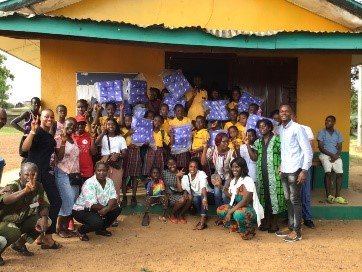
TuMi's Care Initiative partnered with the Liberian Ministry of Gender, Children and Social Protection to improve Menstrual Hygiene Health for adolescent and hearing-impaired women and girls by donating several sanitary pads to the Liberia School of the Deaf, Liberia School of the Blind and several orphanage homes
These include:
Sexual Reproductive Health and Right Services
Advocacy
Inclusive health service provision for People with Disability: We support the readiness of health facilities to respond to those most in need.
Social Behaviour Change: Across health, gender, education and Environmental Protection, we engage in interventions that promote
access to information and impact behaviour change for the general population with emphasis for the most vulnerable and people at risk.
Drug and substance abuse awareness and support for rehabilitation services for victims
HIV/AIDS
Malaria
TuMi care Initiative framework for gender equity and equality is based on the Global Normative Framework of 1994 “Programme of Action of the International Conference on Population and Development” who consider women empowerment as central to development and whose goal is to “ Fulfill the rights of women and girls and achieve gender equality and women’s empowerment.
TuMi's Care Initiative joins several women groups and advocates for removal of taxes on all sanitary pads to improve access to menstrual hygiene services
Centrality of sexual and reproductive health and rights to both health and development, including the right to have control over and decide freely and responsibly on SRH, free from violence and coercion. Special focus will be placed on men’s shared responsibility for sexual and reproductive health. Our interventions include
Our education program includes empowerment opportunities and are focused on In and Out of School programs for adolescent and young people across Schools and communities. We establish health clubs and conduct Peer To Peer engagement on sexual reproductive Health and Rights services, gender norms and values and education. We envision a space where the people with disabilities will thrive and participate in activities without discrimination.
Climate change is nature’s response to human abuse of its integrity through excessive greenhouse gas emissions into the atmosphere. As such, we see nature’s wrath on vulnerable communities in Liberia. In many instances, communities work together with or without support to restore the integrity of nature and adapt to the effect of climate change.
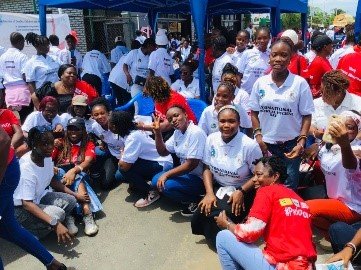
TuMi's Care Initiative partnered with Liberia's Environmental Protection Agency (EPA) to provide Climate Change Education
In Liberia, where government machinery is weak or in many cases non-existent, it is the communities that have protected life, used collective knowledge, and supported the weakest members against the wrath of nature. In fact, communities are often seen as a substitute for governments in terms of building strategies to navigate through difficult times. It is in this context that TuMi’s Care Initiative using the Community Based Approach (CBA) program will build the capacity of communities in reducing impacts of climate change in a community.
TuMi’s Care Initiative is looking for individuals with the passion and skills to improve access to health and social services for all while prioritizing the most vulnerable at-risk population and people with Disability.